Reflections on the Royal Society report on Science for Society, from a veteran who has been in this space for 30 years!
We’ve known these challenges in science education and engagement for years.
This latest report doesn’t change the message — but it does raise the stakes.
If we want science to work for society, we need to start valuing the systems that connect them.
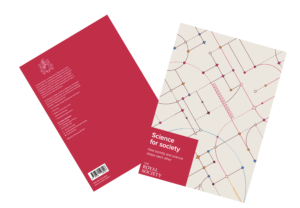
I’m hugely grateful to my science and education colleagues who contributed to and shaped this report – an important and long overdue update on the 40 years since the 1985 Bodmer Public Understanding of Science report (at the risk of showing my age, this is what we called public engagement at the start of my career!).
👇 Thoughts from working in the space between schools and research 👇
We’ve known this for years… so why hasn’t it changed?
I’ve been reflecting on the Royal Society’s Science for Society report — and honestly?
👉 It doesn’t tell us anything radically new.
If you work in science education or public engagement, you’ve heard this all before:
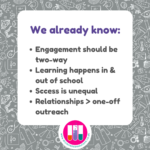
- Engagement should be two-way
- Science learning happens in and out of school
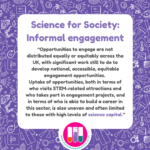
- Access is unequal
- Relationships matter more than one-off outreach
None of that is new.
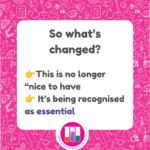
What is different is this:
👉 it’s finally being framed as essential — not optional
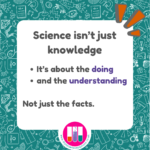
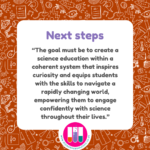
🔬 Science isn’t just knowledge
One point that really matters (and often still isn’t reflected in practice, especially at secondary):
👉 Science is about the doing and the understanding — not just the facts
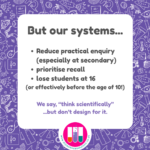
But our systems?
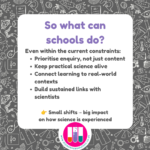
- Reduce practical enquiry
- Prioritise content and recall
- Lose students at 16 (or even before the age of 10 according to the ASPIRES research).
We keep saying we want young people to think scientifically…
…but we don’t consistently design for them to experience science that way.


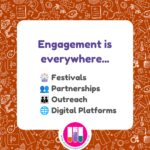
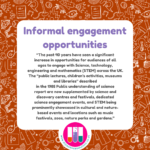
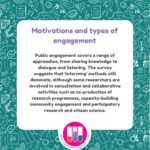
🌍 Engagement is everywhere… and nowhere
We’ve built an incredible ecosystem:
festivals, school partnerships, outreach programmes, digital engagement
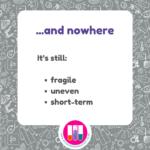
But it’s:
- fragile
- uneven
- often short-term
And despite all of this?
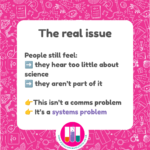
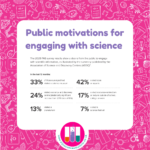
➡️ People still say they don’t hear enough about science
➡️ And don’t feel part of the conversation
That’s not a communication problem.
👉 That’s a systems problem.
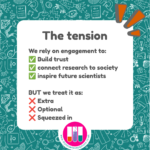
🔁 Here’s the real tension
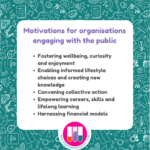
We rely on engagement to:
- build trust
- connect research to society
- inspire the next generation
- support public decision-making
…but we still treat it as:
❌ extra
❌ optional
❌ something people squeeze in
That disconnect isn’t sustainable.
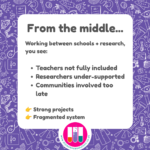
🤝 For those of us in the middle…
Working between schools and research, you see this clearly.
Great work is happening — but it’s not joined up.
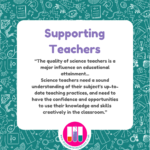
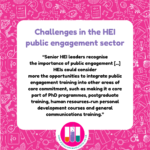
- Teachers are key… but not always included
- Researchers want to engage… but aren’t always supported
- Communities are interested… but not always involved early enough
👉 We have pockets of excellence
…but not yet a coherent system
🚨 So here’s the challenge
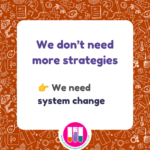
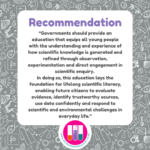
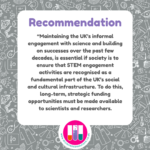
If we take this report seriously, we need to do something much more difficult than writing another strategy:
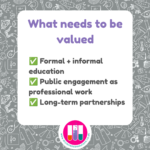
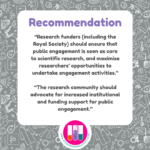
👉 We need to properly value engagement, outreach, and science learning — in all its forms
That means:
- valuing formal and informal science education
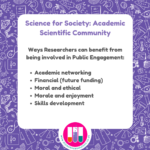
- recognising public engagement as skilled work
- embedding it in funding, careers, and institutional priorities
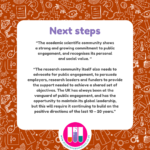
- investing in long-term partnerships between schools, research, and communities
Because without that?
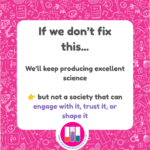
We’ll keep producing excellent science…
👉 but not always a society that can engage with it, trust it, or shape it.
💬 Where are you seeing engagement genuinely valued — not just expected?
#ScienceEducation #PublicEngagement #Outreach #InformalLearning #STEM #ResearchCulture #SciComm #Education #ScienceIsEverywhere #BeCurious #DrJoScience