
I love exploring new ideas, resources and activities to enhance teaching and learning. I have collated a list of great resources to support primary science, as well as a padlet of digital tools and apps co-created with international teachers during an OUP conference on re-imagining the science learning journey.
I was recently asked to take a look at the new Primary Interactive Library from Pearson – the prominent education digital media company. This post is not sponsored, paid for or gifted, and opinions are mine – although I’d always welcome a cuppa if you wanted to buymeacoffee.com/DrJoScience!
The Primary Interactive Library is powered by ActiveLearn Primary and includes a whole host of interactive resources across core and foundation subjects from early years to year 6.
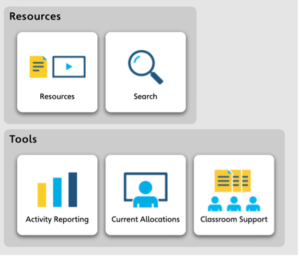
It has a clear user-friendly design, with a visually appealing format of easily navigable subject area squares on the home page before delving into the 5000+ curriculum-linked resources.

There are separate admin (teacher) and child log-ins so you can assign specific activities for individuals or a class. As well as a Top Tips help section, planning support and live chat feature on the website, there is also a comprehensive FAQ section, including the holy grail prominent how-to-reset-lost-child-passwords!

You can filter the resources by subject, year group, topic and resource category, which makes finding what you need really easy!
As a science specialist, I’ve delved into these resources and had a good look around. There are videos and engaging texts and contexts as well as interactives and games for children to complete – either independently or in groups/whole class using the interactive whiteboard. I would use these as part of a teaching sequence to support children not quite at age related expectations for specific national curriculum objectives, or as consolidation or extension activities for higher attaining groups.


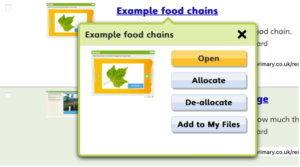
In science, the resources are divided into:
- Interactive whiteboard
- Quest – prompts, images and text to provide context and information about a topic
- Science Bug – images and interactive whiteboard activities such as sorting and grouping (Science Bug is Pearson’s popular digital scheme)
- Videos
(although these are not always obvious until you’ve clicked on them)
Pearson are being very responsive to feedback – I’ve made a few suggestions about content, misconceptions, functionality and consistency, and they are making tweaks to further improve the platform.
There are also resources for literacy, maths (where there are many different interactive resources), history and geography, as well as pick-up-and-teach lesson plans and activities to cover online safety. The planning section here gives good background info and tips in teachers’ notes and gives explicit learning intention, activities, plenary, extension and success criteria, as well as prompts for questioning and glossary of terms. Whilst The Interactive Primary Library is a suite of resources covering different subject areas, there doesn’t always seem to be a cohesive format across subjects – not all subject areas go into as much detail as others, for example.

Getting full use out of the platform would require some investment in time and experience to be able to use these resources effectively to support teaching and learning. There are other places to find similar interactives – for example BBC Teach, and Explorify for science – but the new Primary Interactive Library in ActiveLearn pulls different components together across multiple subjects in an easily searchable location, with the added bonus of being able to set specific tasks and it also includes an assessment area.
The Interactive Library is definitely not intended to be a complete scheme of work, particularly for science – Pearson have Science Bug for this, and there are many, many schemes of work and curricula available – and it doesn’t support developing enquiry and working scientifically skills. It does require a degree of familiarity with a topic and subject-specific pedagogy but does offer additional resources to complement an established teaching sequence and programme of study.
You might find this blog post on support for primary science teaching and science leads useful.
Why not take a look at Pearson’s Interactive Library from ActiveLearn and see what you think!
