
…when the grass is jewelled, and the silk inside a chestnut shell…

OK, you have to be a certain age and have gone to primary school in the UK to appreciate that song (from the Come and Praise hymn book), but I often find myself singing it at this time of year.
Autumn has arrived and the leaves are just starting to change colour in the northern hemisphere, as you can see in this photo above. I recently wrote about other causes of browning leaves, but this time it’s the real, autumnal, deal!

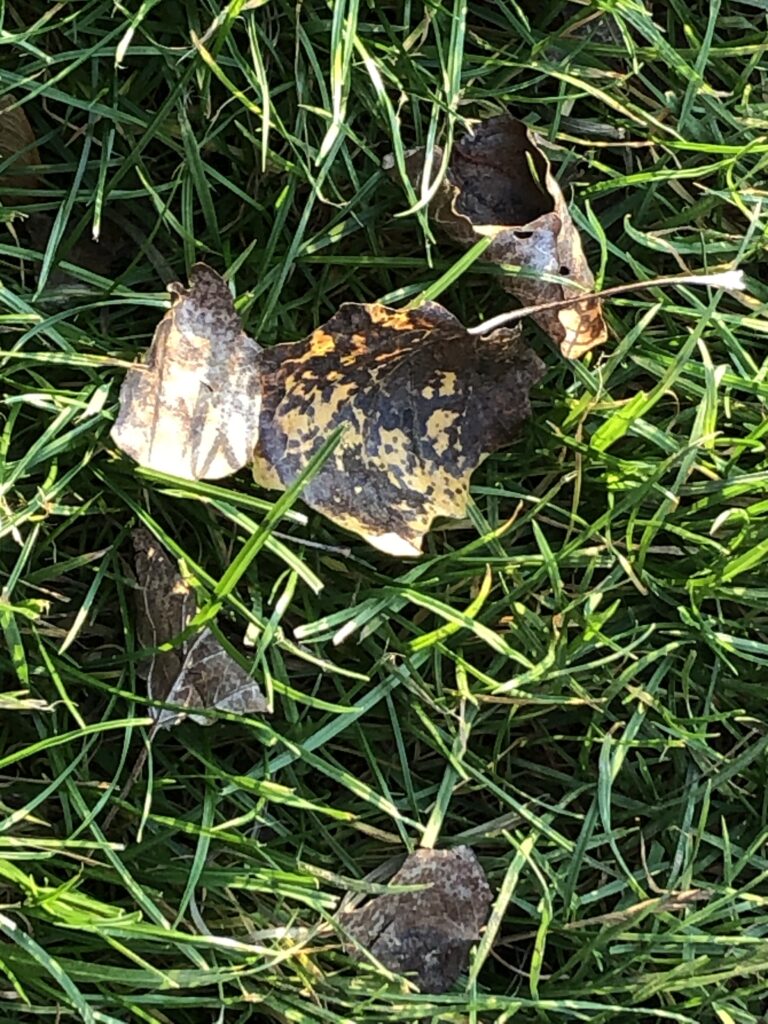


Green leaves start to change colour in the autumn. Different coloured pigments in the leaf determine the colour (some leaves aren’t even green to begin with, such as the copper beech or the smokebush). Even green leaves actually have other colours hidden beneath them too. We can separate out the colours in leaves using chromatography:


You can find out more about the pigments in leaves and how to separate them using chromatography in this video about plant pigments for the #GlobalScienceShow.
The green colour of leaves is due to pigments caused chlorophylls, which the plant uses to make energy from sunlight in a process called photosynthesis. Other pigments – including carotenoids, flavonoids and anthocyanins – are also involved in photosynthesis to a lesser extent.
As the seasons change, day length shortens, and temperatures drop, the production of chlorophyll slows down and stops. Any remaining chlorophyll is then broken down by the leaves, revealing other pigments ; yellow and orange carotenoids and flavonoids become visible as the green fades away. These will also fade in turn, more slowly, as they also degrade.
The leaves will eventually turn brown, dry out and fall from the tree in a process called abscission (literally meaning to cut off). A layer of abscission cells form at the base of the leaf or stalk, blocking off the leaf and eventually causing it to drop. Sugars trapped in the leaf are converted to red, purple or pink anthocyanin pigments. The exact colour of the pigment is affected by acidity, and anthocyanins make excellent natural pH indicators, as seen in these flower petals:


You can find out more about the structure of these different pigments and what happens as leaves change colour and fall from the trees in this brilliant infographic from @compoundchem
